

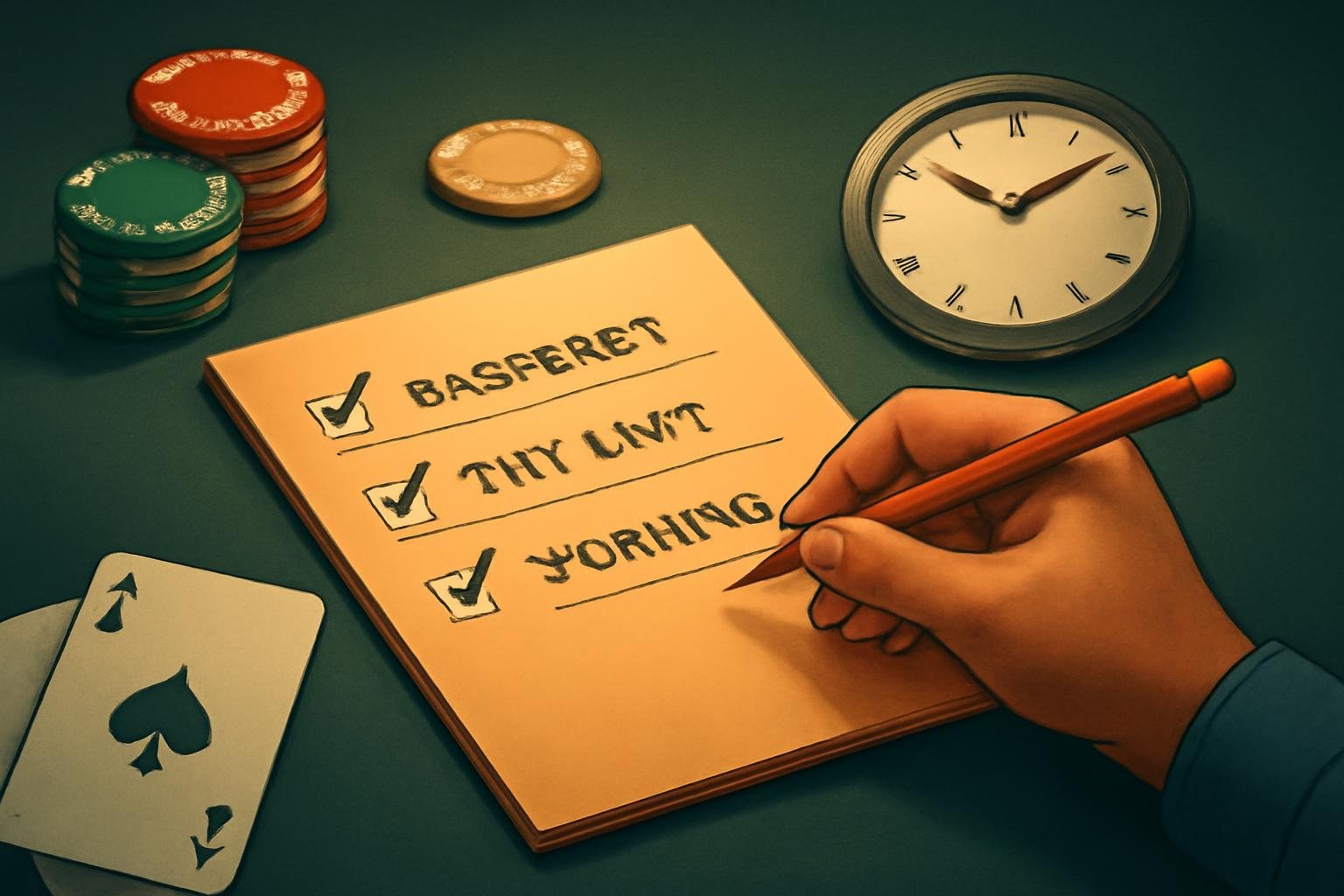
A session stop plan is a simple set of limits decided before opening a casino game. It gives you clear points to pause or finish, rather than leaving those decisions to a moment when you may feel tempted to continue. It cannot change the outcome of a game, but it can help keep gambling within boundaries you have chosen in advance.
The useful part is making the plan specific. “I’ll stop if I spend too much” is hard to apply in the moment. A written budget, a time limit and a rule for what happens when either limit is reached are much clearer.
Choose a spending limit from your spare budget
Decide on an amount you can afford to lose without affecting essential costs such as housing, food, bills or debt repayments. Treat it as entertainment spending, not money you expect to win back. If there is no amount you can comfortably set aside, the sensible limit for that session is zero.
Keep the limit separate from money needed for everyday expenses. If a deposit is part of your plan, review the available payment methods and transaction security considerations before using one. Do not use credit or borrow money to extend a session.
Set a time boundary as well
Choose a finish time before you start, and consider setting an alarm somewhere you will notice it. A time boundary matters even if you still have money left: reaching it means the session ends, not that you should use the remaining budget.
For example, a plan might say: “I will play for up to 30 minutes, with a maximum entertainment budget of £10. I will stop when either limit is reached.” The figures are only an illustration; your own boundary should reflect your circumstances and may be lower—or none at all.
Decide what “stop” means in advance
A limit is easier to follow when it comes with a practical next step. Decide beforehand what you will do when the timer rings or the budget is used. You might close the game, sign out, put your device away and move to another activity. Avoid making a new deposit or changing the limit during the same session.
If the site offers account controls such as deposit limits, session reminders or time-outs, check the terms and how each control works before relying on it. Features differ between services, and an account setting is not a substitute for deciding whether you want to gamble in the first place. When comparing a service, its controls and account features can be one point to review alongside the other factors to consider when choosing an online casino provider.
Write down the plan and keep a simple record
A brief note can make it easier to see whether you followed your own boundaries. Record the planned budget and duration, then note when you started and stopped and how much you spent. Keep the record factual; it is not a way to predict results or find a system that guarantees a better outcome.
If a balance or round entry is unclear, check the account’s game history rather than relying on memory. A guide to reading an online casino game history explains the kinds of details that may help when reviewing a record.
Watch for signs the plan is no longer working
- You keep extending the end time or raising the spending limit.
- You continue because you want to recover money already lost.
- You feel pressured, upset or distracted, but carry on playing.
- Gambling is affecting bills, sleep, relationships or responsibilities.
If any of these feel familiar, stop the session and consider taking a longer break. You can also seek confidential support from a recognised gambling-help service in your area. If you find it difficult to stick to limits, choosing not to gamble and asking someone you trust for support are valid next steps.
A quick pre-session checklist
- Have I set a budget using only money I can afford to lose?
- Have I chosen a firm end time?
- Do I know what I will do when either limit is reached?
- Am I calm and free to choose not to play?
If you cannot answer these comfortably, pause instead of starting. The point of a stop plan is not to make gambling risk-free; it is to make your boundaries clear before the session begins.